Damage Just Happened
Preserve safe, useful records of the fire & smoke damage and the steps taken to protect the property.
Request a Claim ReviewEmpire Public Adjusters
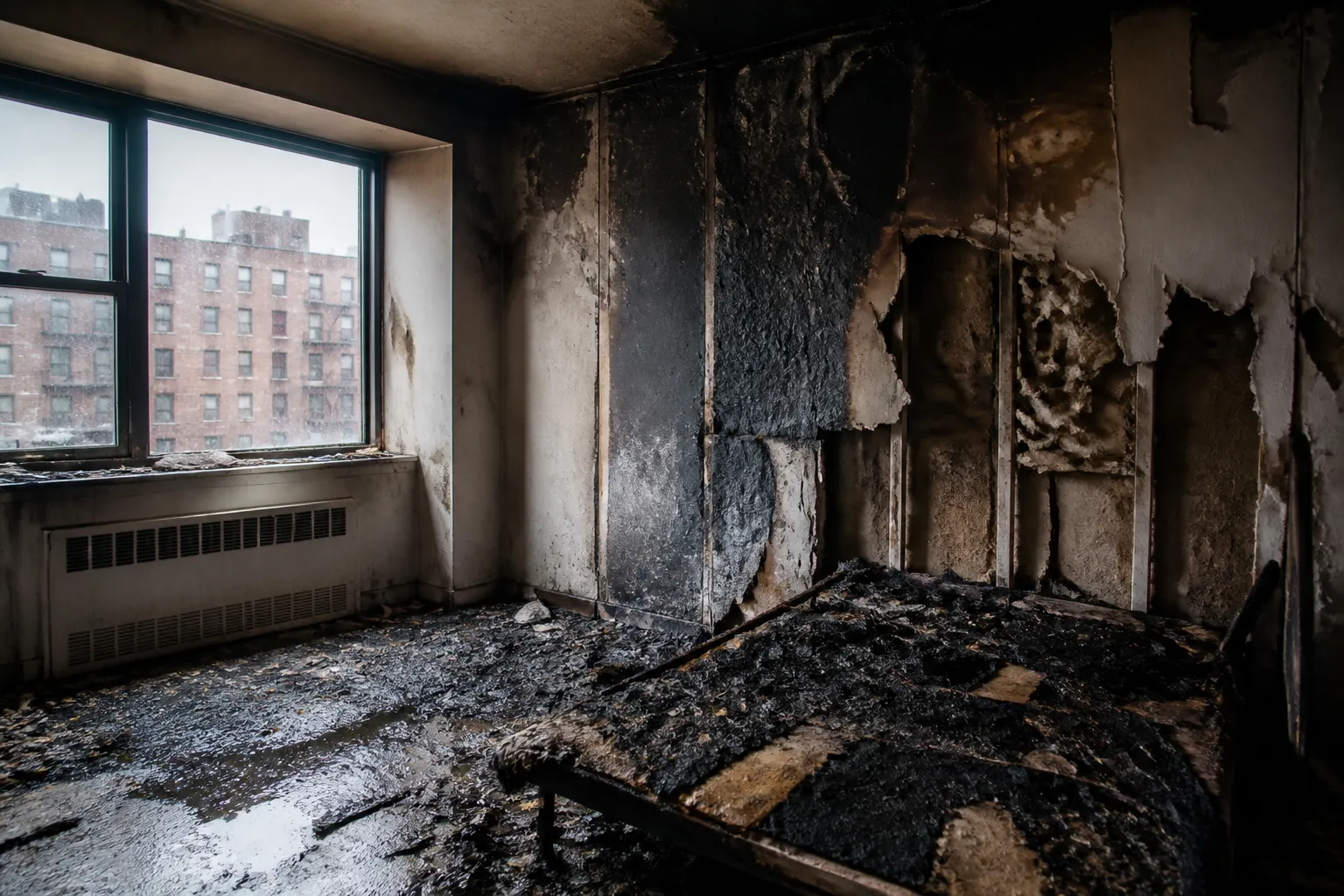
Fire losses can involve direct fire damage, smoke, soot, water used during suppression, and damage to building materials or contents.
Coverage and the available claim options depend on the cause of loss, policy language, documentation, and claim status.
Immediate Claim Situation
The first priorities are personal safety, emergency services, and reasonable steps to protect the property. Once conditions are safe, photographs, inventories, mitigation records, and clear notes can help preserve the details of a complicated loss.
Discuss My ClaimUnderstanding the Loss
Depending on the cause of loss and policy, documentation may need to address several related areas.
A Structured Claim Process
We organize the fire & smoke damage claim around the property condition, supporting records, policy requirements, and carrier communication.
Review how the fire occurred, the affected areas, and the claim's current status.
Document visible fire, smoke, soot, and related water damage across the property.
Organize building estimates, contents records, invoices, photographs, and mitigation information.
Present supporting information and address carrier questions about the documented loss.
Claim Friction
Questions do not automatically mean a claim was handled improperly. They often signal where clearer documentation or follow-up may be useful.
Help at Your Claim Stage
Preserve safe, useful records of the fire & smoke damage and the steps taken to protect the property.
Request a Claim ReviewBring the claim number, estimates, correspondence, photographs, invoices, and current questions to the review.
Request a Claim ReviewCompare the documented damage and repair information with the scope that has been presented so far.
Request a Claim ReviewResidential & Commercial
The documentation and claim questions vary by building type, use, occupancy, and policy.
Related Claim Services
Some losses involve more than one category of damage. Explore Water Damage, Commercial Property Claims, Storm Damage for related claim information.
Claims involving burst pipes, plumbing failures, leaks, and covered water losses.
View Water DamageClaims involving wind, hail, severe storms, and fallen trees.
View Storm DamageClaim representation for commercial buildings and business properties.
View Commercial Property ClaimsNew York Areas Served
Use a local page for area-specific property context. These links describe service areas and do not represent separate physical offices.
View All Service AreasFire & Smoke Damage FAQ
Put safety first and follow emergency instructions. When it is safe, photograph conditions, preserve receipts, track temporary measures, and avoid discarding damaged items before they are documented when practical.
Yes. Smoke and soot may affect areas beyond the visibly burned materials. A public adjuster can help document affected surfaces and organize relevant cleaning or repair information.
Suppression water can be documented as part of the overall loss. Whether and how it is covered depends on the policy and the facts of the claim.
An open fire claim can often be reviewed, including existing estimates, photographs, inventories, mitigation records, and carrier correspondence.
The service applies to residential and commercial property, subject to the circumstances of the loss and the policy.
Keep photographs, receipts, temporary-protection invoices, contractor estimates, inventories, carrier letters, and notes of claim-related conversations.
A single loss may affect both the structure and personal or business property. Each category should be documented separately and evaluated under the applicable policy terms.
The site covers New York City, Long Island, Nassau County, Suffolk County, Westchester County, and the five boroughs. Call to confirm service for the property address.
Need Help With a Fire & Smoke Damage Claim?
Tell us what happened, where the property is located, and where the fire & smoke damage claim currently stands.